pixelo
Problem: kids want to be on social media, but most platforms have an age restriction. Those that allow younger users often don’t have effective filtering capabilities on content or direct messaging.
Solution: a one-stop, contained & controlled social media platform incorporating direct messaging, instagram, and tweets.
Product Decisions
The core design constraint was trust, not features: parents needed real control over who their kids could talk to, so every join and DM request routed through an admin-approval flow (via Twilio SMS) rather than open sign-up. That's the one piece I wouldn't compromise on.
Everything else stayed deliberately lean. There was no roadmap pressure to add features the 15 users at its peak weren't asking for — the right call for a walled-garden product with a shelf life, not an open-ended one.
Pixelo had 15 active users with 6 core users in its prime and was retired when the core group graduated to using other social media — which was always going to be the exit. Success here wasn't growth, it was: did it serve its users safely for as long as they needed it. I was very happy with the outcome and so were the kids!
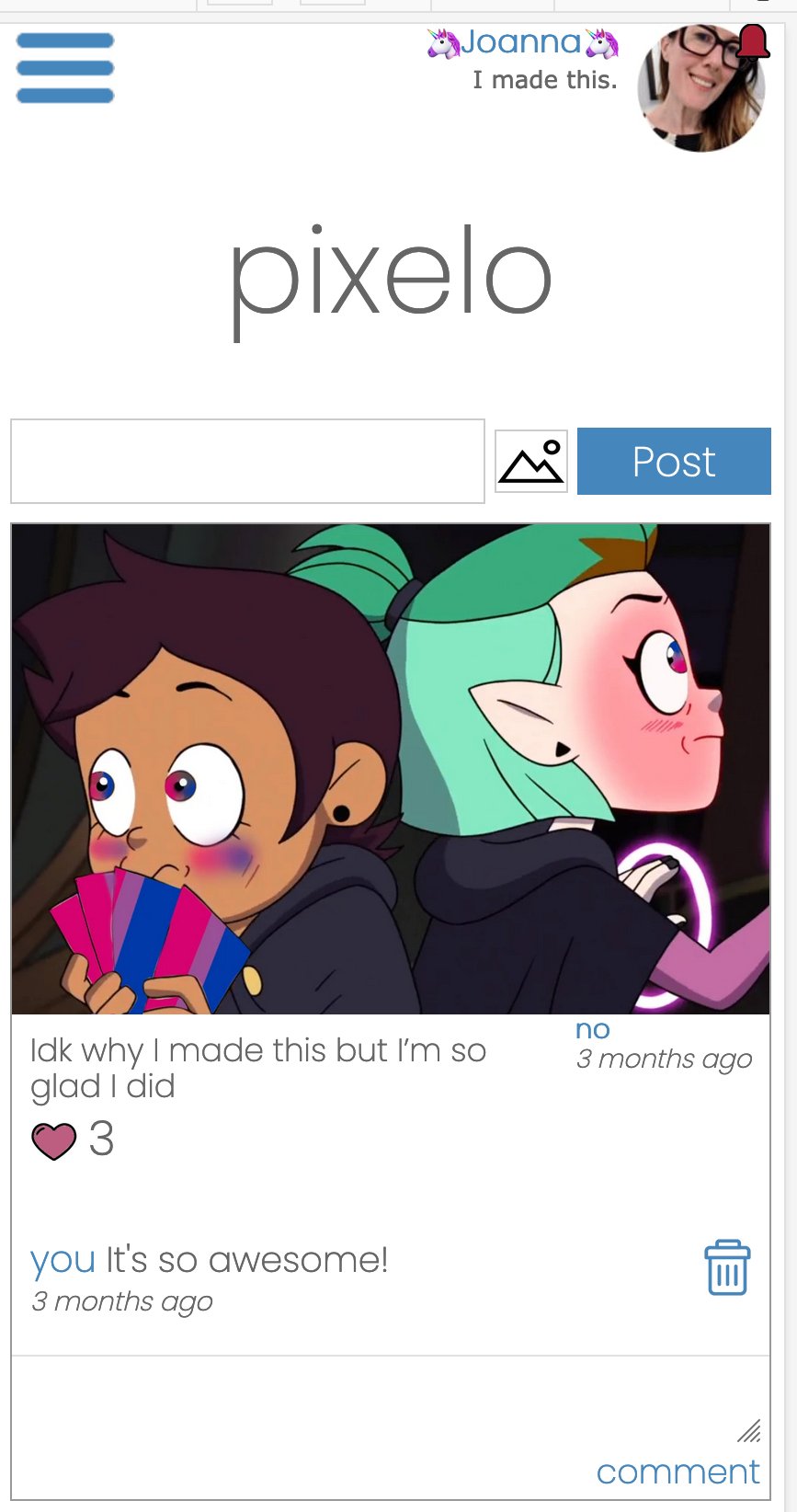
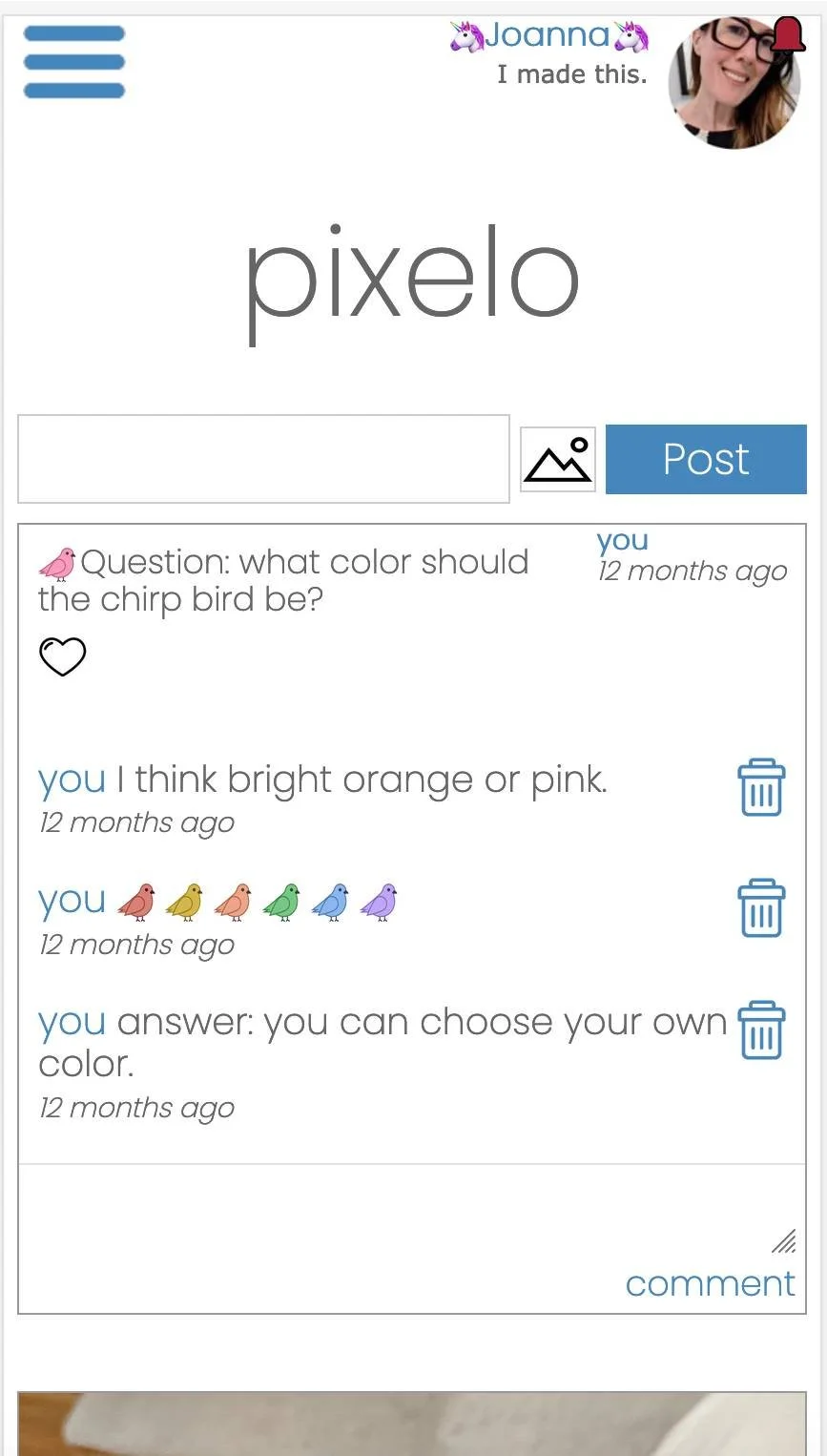

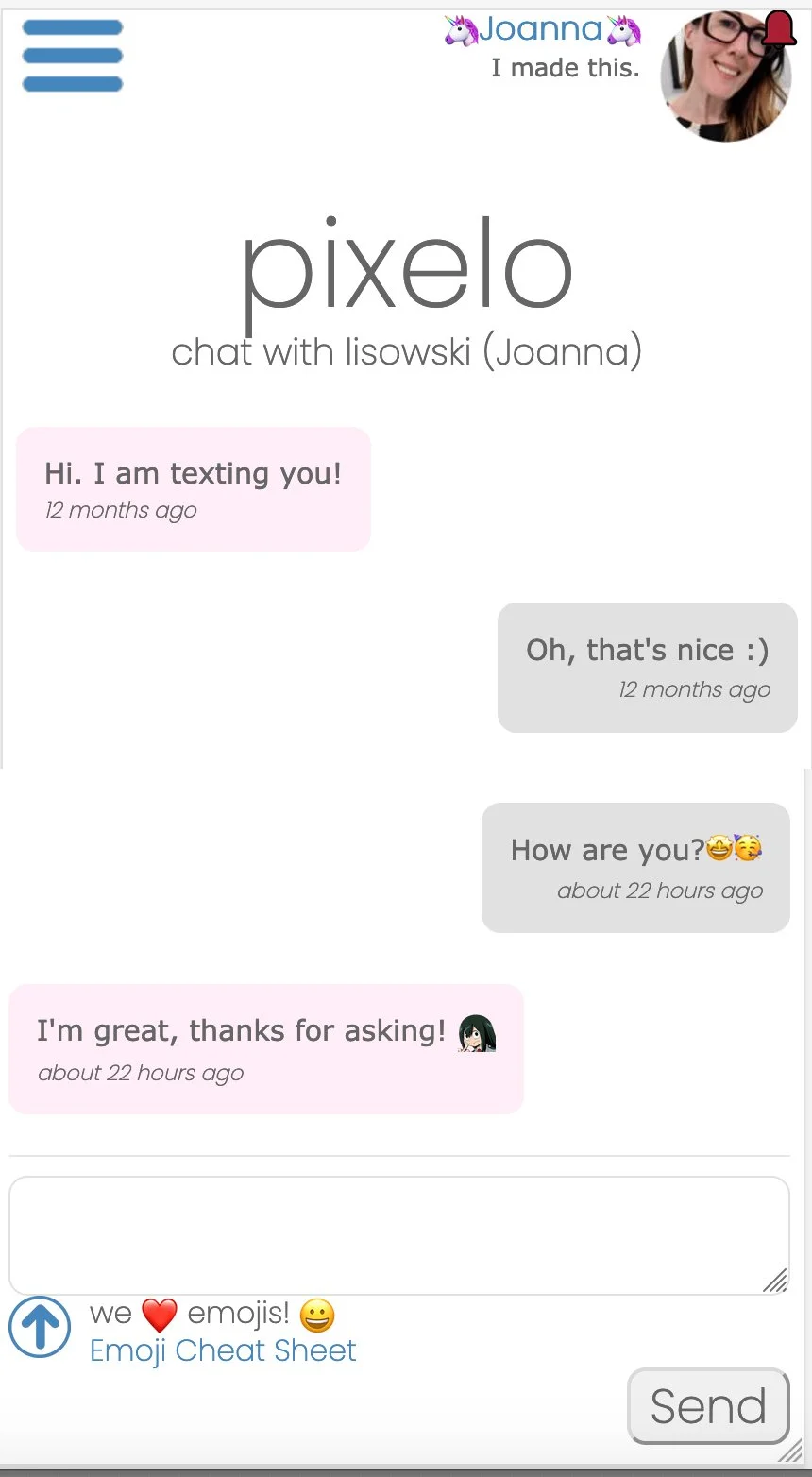
Implementation Notes
Pixelo uses Twilio to send real time SMS messages to admins when requests are made by users to join groups or set up accounts. This allows tight control over who has access, but without causing unnecessary delays while requests are awaiting review.
The message feature uses Pusher API to maintain an open connection (via websockets) for users to message each other back and forth without needing to trigger content refresh.
Images are handled by Cloudinary, a service that allows dynamic transformation of images with S3 storage and low-latency caching.
The Future
We kept this feature lean until the kids inevitably grew out of it. There really was no need to make it more complex than it was. It was super fun for them to have their own little walled-off experience though! And it was especially fun having them as the “client.”
Infrastructure Notes
-> Pixelo is built on Rails 6.0.3/Ruby 2.6.3
-> Security is handled by Google OAuth2 / Omniauth
-> Images are handled by Cloudinary
-> Database is MariaDB
-> Caching is brought to you by Memcached via Memcached Cloud on AWS
-> SMS is managed by Twilio
-> Emoji implementation by gemoji
-> App uses Pusher API for real-time communications (via webSockets)
-> Pixelo was designed with a "mobile first" philosophy for key features to be used primarily on phones and tablets
-> Code is managed via git on GitHub
-> Logs are managed by Papertrail
-> App was originally built in 2020 and needs a few minor updates
-> The app runs on Heroku 'hobby' dynos on a tiered plan shared with a custom decision engine called Is That What You're Wearing?. Pixelo currently has 5 active users, but is likely not scalable beyond a few dozen